


livingart
-
Posts
17893 -
Joined
-
Last visited
Content Type
Profiles
Forums
Events
Plant Articles
Fish Articles & Guides
Clubs
Gallery
Everything posted by livingart
-
Cycling your tank Author: Jennifer Hamlin First published in Aquarium World Magazine November 2011 When getting a new tank, it can be tempting to rush and fill it with fish, but if the filter isn’t properly prepared, a new tank can quickly result in a series of disappointments as the water quality deteriorates and the fish struggle to survive. Fish that live in enclosed aquariums are subject to a buildup of toxic wastes in their environment. The majority of these waste products result from the fish urinating, defecating and breathing in the water where they live. Additional waste products can result from decomposing organic matter in the aquarium such as decaying plants, excess food and dead fish. These waste products have one thing in common, the nitrogen molecule. There are a number of species of beneficial bacteria that process nitrogenous wastes into less toxic chemicals and these bacteria work to our advantage by eliminating waste products so that the aquarium is less toxic for its inhabitants. Aquarium filters have been devised to maximise the space provided for these beneficial bacteria to thrive. This type of filtration is called biological filtration and the initial establishment of bacteria within the biological filter is called cycling the filter and is essential to ensure that the water quality is maintained for the good health of the fish. This is one of the most important principles to understand when keeping fish. The Nitrogen Cycle To understand biological filtration, it is helpful to understand the way in which wastes are processed by bacteria in the aquarium. This process is called the nitrogen cycle. Ammonia is one of the principle chemicals in the nitrogen cycle. Fish produce ammonia as a waste product from the digestion of foods and as a by-product from respiration. Uneaten food, solid waste, plant materials, and other organic items decaying in the tank also produce ammonia. Ammonia is a nitrogen-based compound, and it is extremely toxic to all animals. In an aquarium, ammonia can build up quickly. Even a very small amount of ammonia can be stressful to fish so it is important to remove ammonia from the water before it builds up to toxic levels. In nature, a type of bacteria known as Nitrosomonas thrive on a constant diet of ammonia. In an oxygen-rich environment, Nitrosomonas consume ammonia and converts it into nitrite. Nitrite is also toxic to fish and in the long run tends to be a larger problem than ammonia. Another type of bacteria, Nitrospira (also known as Nitrobacter), will consume the nitrite and convert it to nitrate, a relatively harmless compound that can be used up by plants and algae. It is this partnership between Nitrosomonas and Nitrospira which enables the biological filter to function so that fish can be kept in closed aquarium systems. TIP: note the difference in spelling between nitrite and nitrate. Nitrate is the end product so remember it by thinking that the toxic compounds have been all eaten up – ‘ate’ Nitrosomonas bacteria are found everywhere in oxygen rich environments with sufficient nitrogenous waste; however, in the closed aquarium it takes a while for these bacteria to build up a population that is capable of consuming all the ammonia produced by the fish. The buildup of Nitrospira is even slower since high ammonia levels inhibit its growth. Only when the Nitrosomonas bacteria convert the toxic ammonia to nitrite will the Nitrospira populations be able to grow. While it may only take a few days for the population of Nitrosomonas to grow large enough to control the ammonia levels, the delay in Nitrospira growth means it can be a week or more before nitrite is under control. Once the population of nitrifying bacteria is established, the tank is considered to be ‘cycled’ and as long as the level of waste in the aquarium remains constant, and the bacterial population remains healthy, there should no longer be a build up of toxic ammonia. The tank is now a safe environment for fish to live. The end product of the nitrogen cycle is nitrate. In low concentrations, nitrate will not harm fish and it can actually provide a useful nutrient for aquatic plant growth; however, if there are no plants in the tank to consume the nitrate, simpler plants like algae will begin to grow and can cause a nuisance. Also, high nitrate levels can be stressful for fish so it is important to minimise nitrate buildup by keeping aquatic plants or by doing regular partial water changes. Methods of Cycling When establishing a new tank, it is best not to fully stock the tank until the filter is capable of handling the bioload of waste products. There are several ways to get the biological filter ready to handle a tank full of fish. The main methods include: Adding mature media Seeding the filter with a bacterial culture Fishless cycling Cycling with fish Mature Media One of the best ways to quickly establish a working biological filter is to add mature media from an established filter. In other words, this means taking used filter media (e.g. noodles, sponges or filter wool) and placing it into the new filter so that the bacteria can quickly spread throughout the new filter media and tank. In a stable established tank it is safe to remove a small portion of the biological filter media (no more than a third) and replace it with new media. In no time the bacterial populations will return to normal. When transferring the mature media it is important to keep the bacteria alive so that they will be able to colonise the new filter. The bacteria will start to die off slowly without a constant flow of oxygenated water so it is important to get it into a running filter quickly to get the best benefit. It is helpful to treat the media as you would a live fish – ensure it has oxygen and is kept in mature stable water conditions (use mature tank water and avoid temperature extremes). Aim to place it into the filter as soon as possible to minimise bacterial die off. The new filter can be filled with new media and then the mature media can be added (be sure to add some of the ‘dirty’ water that the filter media was transported in as this will contain bacteria as well). The tank should be able to safely handle a small number of fish with minimal risk of ammonia spikes. When the new tank has had time to settle and all of the new media in the filter has had a chance to build up populations of nitrifying bacteria, more fish can be added slowly to build up the bioload (the amount of waste produced by the tank and its inhabitants). The filter in the picture above has been running for a long time and it is well cycled. It has just been opened and a good amount of brown sludge can be seen. A small portion of the ‘dirty’ media from this filter can be a great way to start up a new filter. Seeding the Filter Seeding the filter is when new media is colonised by adding a culture of nitrifying bacteria. This can be achieved either from adding ‘dirty water’ from a mature tank or by adding a commercial bacterial culture like TLC Smart Start to the new tank water. Once the bacteria have been added to the new media, they must have a supply of nitrogenous waste to consume or they will not survive. Adding a few hardy fish can ensure that these bacteria survive however it is very important to monitor the ammonia and nitrite levels to make sure that the bacteria are able to handle the waste that the fish provide. A number of excellent products are avaialble on the market that offer bacterial cultures that can speed up cycling. TLC Smart Start is one such product. A bottle of this is added to the tank and a full complement of nitrifying bacteria will seed the filter as well as all other surfaces of the tank helping it to get established and avoid toxic levels of ammonia and nitrites. Other tank additives such as Cycle, Seachem Prime and Stress Zyme have some added nitrifying bacteria that can be added on a weekly basis, or whenever water is changed, to help with cycling but they are generally just adding Nitrosomonas bacteria in small quantities so are not as effective at completely seeding the filter. Some can be useful in reducing toxic ammonia levels but this should not be a cure for bad husbandry. Fishless Cycling If starting with completely new media in a new tank, virtually no nitrifying bacteria will exist so a population will need to be established. The first step is to create an ammonia-rich environment that will support the first populations of beneficial bacteria. Ammonia can be supplied by fish living in the tank, or by adding pure household ammonia to a tank that as no fish. In the interests of minimising suffering to the fish who may have to endure toxic levels of ammonia and nitrite, a fishless cycling method is preferred by many experienced fishkeepers. This method also tends to be much faster than cycling with fish since a higher level of ammonia can be added without risking harm to any fish. How To: With the fishless cycling method, no fish are added until the tank is completely cycled. The ammonia levels are created artificially either in the form of adding decaying food, dead fish, dead shrimp or simply by adding a small amount of pure ammonia (without added detergents) from the supermarket. The following steps are carried out: The tank is filled with water and the heater is turned up to 32 degrees. Ammonia is added until the levels are just detectable (up to 4 ppm (mg/L) using a standard aquatic ammonia test kit. The water is tested every day and after a week or so the ammonia levels will begin to drop and the nitrite levels will increase. After a few more days, the nitrite levels will keep rising and eventually it will start to fall and the nitrate levels will begin to increase. Once there is no trace of ammonia or nitrites the temperature can be turned down and a partial water change can be carried out (do not clean the filter or vacuum the gravel). This process will take 7 days to 3 weeks depending on the concentration of ammonia and the careful control of ammonia levels throughout. A small number of fish can be added as soon as the water is tested to be stable for 24 hours (i.e. a suitable temperature and no toxic compounds). The number of fish can gradually be built up over time as bacterial populations adjust to the bioload. Cycling with Fish A new tank and filter can also be cycled with fish using the same principle as the fishless cycling method; however, this method uses the natural ammonia waste products from the fish living in the tank instead of any adding any pure ammonia. In many ways, this method is the least desirable way to cycle the tank since the fish may have to endure very toxic conditions until the nitrifying bacteria have populated the filter sufficiently to handle the bioload. Since the tank is in a state of instability, there are also additional problems that can occur during this process including bacterial bloom or fish diseases. How to: There are a few things to consider when cycling with fish: Only a few fish should be added (depending on the size of the tank) so that the amount of waste product is very low – this will help ensure the ammonia levels do not spike too high and kill all the fish suddenly. Some species of fish are not hardy enough to withstand the harsh conditions of cycling but even for the hardiest species it is not uncommon for fish to die during this process. Oxygen levels must be kept very high since the ammonia will damage the fish’s gills and make it difficult for them to extract oxygen from the water. The fish should not be fed too much and ideally not at all if the ammonia levels have spiked. Very careful monitoring of the ammonia levels will If ammonia levels rise over 4 ppm (mg/L) then steps will need to be taken (such as partial water changes) to reduce toxicity or the fish will die. If conditions get too harsh, chemical filtration like Ammo Chips can be added to absorb excess ammonia and while this can save the fish, it will delay the cycling process. Chemicals like Ammo Lock will temporarily make the ammonia levels safe, but they will not prevent the nitrifying bacteria from utilising it which means toxic nitrite will still be produced. It is important to be aware that the fish will be stressed by rapidly fluctuating tank conditions so make every effort to keep conditions in check. Water Testing For experienced fishkeepers, water testing is something that is carried out if and when there appears to be a problem. Carefully observing the fish’s behaviour can say a lot about the tank’s water stability and an experienced fishkeeper can detect even the most subtle changes in demeanour, activity and appetite. For new or inexperienced fishkeepers, water testing is a way to ensure that the tank is safe for fish to live in and it can help educate about early signs of problems. At its very basic, water testing helps to ensure that the filter is functioning optimally; it also is a way to ensure that the pH, hardness and salinity are as they should be for the species being kept. For some parameters, like ammonia, nitrite and nitrate, it is helpful to test the tank water before doing a water change since the objective is to determine what the fish have been living in and how well the filter is working. For other parameters, like pH, hardness and salinity (for brackish or saltwater tanks), the testing should be carried out on the water that will be introduced to the tank although they can also be carried out on existing tank water if a fluctuation in these values is suspected. Most fish shops offer free water testing for the basic parameters such as ammonia and nitrite but it can be very helpful for a fishkeeper to purchase their own test kit that they can use in the home when needed. Monitoring water chemistry with a home kit is an easy affair. Most test kits provide easy to follow instructions and information about what results should be expected and when to seek help. © This item may not be reproduced without written permission
-
Cycling your tank Author: Jennifer Hamlin First published in Aquarium World Magazine November 2011 When getting a new tank, it can be tempting to rush and fill it with fish, but if the filter isn’t properly prepared, a new tank can quickly result in a series of disappointments as the water quality deteriorates and the fish struggle to survive. Fish that live in enclosed aquariums are subject to a buildup of toxic wastes in their environment. The majority of these waste products result from the fish urinating, defecating and breathing in the water where they live. Additional waste products can result from decomposing organic matter in the aquarium such as decaying plants, excess food and dead fish. These waste products have one thing in common, the nitrogen molecule. There are a number of species of beneficial bacteria that process nitrogenous wastes into less toxic chemicals and these bacteria work to our advantage by eliminating waste products so that the aquarium is less toxic for its inhabitants. Aquarium filters have been devised to maximise the space provided for these beneficial bacteria to thrive. This type of filtration is called biological filtration and the initial establishment of bacteria within the biological filter is called cycling the filter and is essential to ensure that the water quality is maintained for the good health of the fish. This is one of the most important principles to understand when keeping fish. The Nitrogen Cycle To understand biological filtration, it is helpful to understand the way in which wastes are processed by bacteria in the aquarium. This process is called the nitrogen cycle. Ammonia is one of the principle chemicals in the nitrogen cycle. Fish produce ammonia as a waste product from the digestion of foods and as a by-product from respiration. Uneaten food, solid waste, plant materials, and other organic items decaying in the tank also produce ammonia. Ammonia is a nitrogen-based compound, and it is extremely toxic to all animals. In an aquarium, ammonia can build up quickly. Even a very small amount of ammonia can be stressful to fish so it is important to remove ammonia from the water before it builds up to toxic levels. In nature, a type of bacteria known as Nitrosomonas thrive on a constant diet of ammonia. In an oxygen-rich environment, Nitrosomonas consume ammonia and converts it into nitrite. Nitrite is also toxic to fish and in the long run tends to be a larger problem than ammonia. Another type of bacteria, Nitrospira (also known as Nitrobacter), will consume the nitrite and convert it to nitrate, a relatively harmless compound that can be used up by plants and algae. It is this partnership between Nitrosomonas and Nitrospira which enables the biological filter to function so that fish can be kept in closed aquarium systems. TIP: note the difference in spelling between nitrite and nitrate. Nitrate is the end product so remember it by thinking that the toxic compounds have been all eaten up – ‘ate’ Nitrosomonas bacteria are found everywhere in oxygen rich environments with sufficient nitrogenous waste; however, in the closed aquarium it takes a while for these bacteria to build up a population that is capable of consuming all the ammonia produced by the fish. The buildup of Nitrospira is even slower since high ammonia levels inhibit its growth. Only when the Nitrosomonas bacteria convert the toxic ammonia to nitrite will the Nitrospira populations be able to grow. While it may only take a few days for the population of Nitrosomonas to grow large enough to control the ammonia levels, the delay in Nitrospira growth means it can be a week or more before nitrite is under control. Once the population of nitrifying bacteria is established, the tank is considered to be ‘cycled’ and as long as the level of waste in the aquarium remains constant, and the bacterial population remains healthy, there should no longer be a build up of toxic ammonia. The tank is now a safe environment for fish to live. The end product of the nitrogen cycle is nitrate. In low concentrations, nitrate will not harm fish and it can actually provide a useful nutrient for aquatic plant growth; however, if there are no plants in the tank to consume the nitrate, simpler plants like algae will begin to grow and can cause a nuisance. Also, high nitrate levels can be stressful for fish so it is important to minimise nitrate buildup by keeping aquatic plants or by doing regular partial water changes. Methods of Cycling When establishing a new tank, it is best not to fully stock the tank until the filter is capable of handling the bioload of waste products. There are several ways to get the biological filter ready to handle a tank full of fish. The main methods include: Adding mature media Seeding the filter with a bacterial culture Fishless cycling Cycling with fish Mature Media One of the best ways to quickly establish a working biological filter is to add mature media from an established filter. In other words, this means taking used filter media (e.g. noodles, sponges or filter wool) and placing it into the new filter so that the bacteria can quickly spread throughout the new filter media and tank. In a stable established tank it is safe to remove a small portion of the biological filter media (no more than a third) and replace it with new media. In no time the bacterial populations will return to normal. When transferring the mature media it is important to keep the bacteria alive so that they will be able to colonise the new filter. The bacteria will start to die off slowly without a constant flow of oxygenated water so it is important to get it into a running filter quickly to get the best benefit. It is helpful to treat the media as you would a live fish – ensure it has oxygen and is kept in mature stable water conditions (use mature tank water and avoid temperature extremes). Aim to place it into the filter as soon as possible to minimise bacterial die off. The new filter can be filled with new media and then the mature media can be added (be sure to add some of the ‘dirty’ water that the filter media was transported in as this will contain bacteria as well). The tank should be able to safely handle a small number of fish with minimal risk of ammonia spikes. When the new tank has had time to settle and all of the new media in the filter has had a chance to build up populations of nitrifying bacteria, more fish can be added slowly to build up the bioload (the amount of waste produced by the tank and its inhabitants). The filter in the picture above has been running for a long time and it is well cycled. It has just been opened and a good amount of brown sludge can be seen. A small portion of the ‘dirty’ media from this filter can be a great way to start up a new filter. Seeding the Filter Seeding the filter is when new media is colonised by adding a culture of nitrifying bacteria. This can be achieved either from adding ‘dirty water’ from a mature tank or by adding a commercial bacterial culture like TLC Smart Start to the new tank water. Once the bacteria have been added to the new media, they must have a supply of nitrogenous waste to consume or they will not survive. Adding a few hardy fish can ensure that these bacteria survive however it is very important to monitor the ammonia and nitrite levels to make sure that the bacteria are able to handle the waste that the fish provide. A number of excellent products are avaialble on the market that offer bacterial cultures that can speed up cycling. TLC Smart Start is one such product. A bottle of this is added to the tank and a full complement of nitrifying bacteria will seed the filter as well as all other surfaces of the tank helping it to get established and avoid toxic levels of ammonia and nitrites. Other tank additives such as Cycle, Seachem Prime and Stress Zyme have some added nitrifying bacteria that can be added on a weekly basis, or whenever water is changed, to help with cycling but they are generally just adding Nitrosomonas bacteria in small quantities so are not as effective at completely seeding the filter. Some can be useful in reducing toxic ammonia levels but this should not be a cure for bad husbandry. Fishless Cycling If starting with completely new media in a new tank, virtually no nitrifying bacteria will exist so a population will need to be established. The first step is to create an ammonia-rich environment that will support the first populations of beneficial bacteria. Ammonia can be supplied by fish living in the tank, or by adding pure household ammonia to a tank that as no fish. In the interests of minimising suffering to the fish who may have to endure toxic levels of ammonia and nitrite, a fishless cycling method is preferred by many experienced fishkeepers. This method also tends to be much faster than cycling with fish since a higher level of ammonia can be added without risking harm to any fish. How To: With the fishless cycling method, no fish are added until the tank is completely cycled. The ammonia levels are created artificially either in the form of adding decaying food, dead fish, dead shrimp or simply by adding a small amount of pure ammonia (without added detergents) from the supermarket. The following steps are carried out: The tank is filled with water and the heater is turned up to 32 degrees. Ammonia is added until the levels are just detectable (up to 4 ppm (mg/L) using a standard aquatic ammonia test kit. The water is tested every day and after a week or so the ammonia levels will begin to drop and the nitrite levels will increase. After a few more days, the nitrite levels will keep rising and eventually it will start to fall and the nitrate levels will begin to increase. Once there is no trace of ammonia or nitrites the temperature can be turned down and a partial water change can be carried out (do not clean the filter or vacuum the gravel). This process will take 7 days to 3 weeks depending on the concentration of ammonia and the careful control of ammonia levels throughout. A small number of fish can be added as soon as the water is tested to be stable for 24 hours (i.e. a suitable temperature and no toxic compounds). The number of fish can gradually be built up over time as bacterial populations adjust to the bioload. Cycling with Fish A new tank and filter can also be cycled with fish using the same principle as the fishless cycling method; however, this method uses the natural ammonia waste products from the fish living in the tank instead of any adding any pure ammonia. In many ways, this method is the least desirable way to cycle the tank since the fish may have to endure very toxic conditions until the nitrifying bacteria have populated the filter sufficiently to handle the bioload. Since the tank is in a state of instability, there are also additional problems that can occur during this process including bacterial bloom or fish diseases. How to: There are a few things to consider when cycling with fish: Only a few fish should be added (depending on the size of the tank) so that the amount of waste product is very low – this will help ensure the ammonia levels do not spike too high and kill all the fish suddenly. Some species of fish are not hardy enough to withstand the harsh conditions of cycling but even for the hardiest species it is not uncommon for fish to die during this process. Oxygen levels must be kept very high since the ammonia will damage the fish’s gills and make it difficult for them to extract oxygen from the water. The fish should not be fed too much and ideally not at all if the ammonia levels have spiked. Very careful monitoring of the ammonia levels will If ammonia levels rise over 4 ppm (mg/L) then steps will need to be taken (such as partial water changes) to reduce toxicity or the fish will die. If conditions get too harsh, chemical filtration like Ammo Chips can be added to absorb excess ammonia and while this can save the fish, it will delay the cycling process. Chemicals like Ammo Lock will temporarily make the ammonia levels safe, but they will not prevent the nitrifying bacteria from utilising it which means toxic nitrite will still be produced. It is important to be aware that the fish will be stressed by rapidly fluctuating tank conditions so make every effort to keep conditions in check. Water Testing For experienced fishkeepers, water testing is something that is carried out if and when there appears to be a problem. Carefully observing the fish’s behaviour can say a lot about the tank’s water stability and an experienced fishkeeper can detect even the most subtle changes in demeanour, activity and appetite. For new or inexperienced fishkeepers, water testing is a way to ensure that the tank is safe for fish to live in and it can help educate about early signs of problems. At its very basic, water testing helps to ensure that the filter is functioning optimally; it also is a way to ensure that the pH, hardness and salinity are as they should be for the species being kept. For some parameters, like ammonia, nitrite and nitrate, it is helpful to test the tank water before doing a water change since the objective is to determine what the fish have been living in and how well the filter is working. For other parameters, like pH, hardness and salinity (for brackish or saltwater tanks), the testing should be carried out on the water that will be introduced to the tank although they can also be carried out on existing tank water if a fluctuation in these values is suspected. Most fish shops offer free water testing for the basic parameters such as ammonia and nitrite but it can be very helpful for a fishkeeper to purchase their own test kit that they can use in the home when needed. Monitoring water chemistry with a home kit is an easy affair. Most test kits provide easy to follow instructions and information about what results should be expected and when to seek help. © This item may not be reproduced without written permission
-
No sorry, nothing until myd January maybe.
-
Cooked I hope. Does make a nice Sushi too though.

-
The first of this seasons youngsters, Pogona vitticeps And his breakfast.


-
They are a beautiful fish, well done.
-
All is not lost, more are available.
-
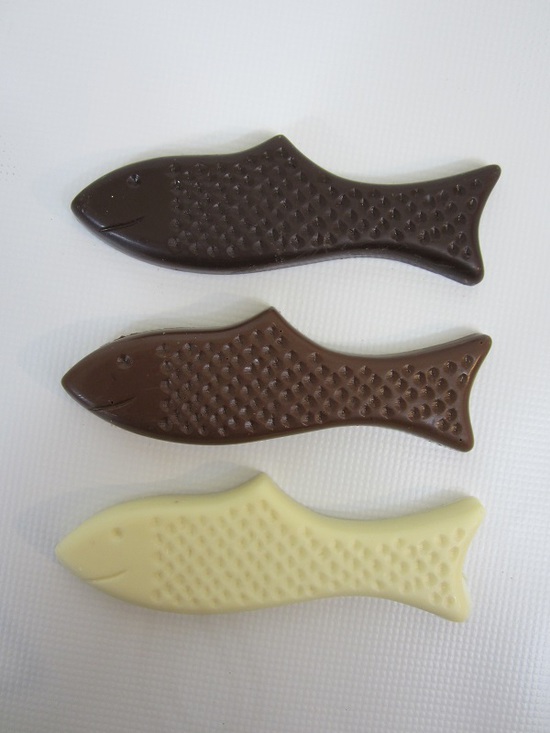
Breeding Chocolate Fish Cocoa pisces (deliscioso) I recently managed to acquire a trio of Chocolate fish to try breeding with, A melanistic male, a normal female and an albino female. Breeding Tank parameters. Minimum size 100 litres Temperature under 18 centigrade otherwise they get soft and lethargic. PH neutral to soft. I used chocolate sprinkles as substrate and fed them Cadbury Flake food to condition them for breeding. These fish usually spawn in caves laying a large egg mass which the male guards for7 days before they hatch. Egg mass. Once the fry hatch I remove the parents just in case they are tempted to eat them. Picture of newly hatched fry. I feed the fry fine particles of food, this is easily achieved by grating a chocolate bar on a kitchen grater. I hope this article helps you achieve breeding these sweet fish. Fry ready for sale.




-
Sad to see your fish has bit the big one but luckily they are a common import nowadays.
-
No it looks fine just asleep, it is an albino or white chocolate gourami. When it wakes up and opens its eyes you will be able to see if the eyes are dark or red.
-
Can't wait to see this set up.
-
https://view.joomag.com/iherp-australia-issue-3/0682664001501470952?short
-
Your problem is the heights of tote, barrels etc in the shed It looks like you pump uphill from the tote with poret in it the blue line is greatest capacity of sump water you can have without flooding living room when power goes off the only way to increase it is to take sump to green box line allowing more water for pump to work to capacity

-
Yes a grey area I would argue they are the same fish posing the same risk they did before being reclassified Was quite surprised that some only exist on the list no where else to be found on the planet lol
-
Just over a 1,000 freshwater fish to do now lol I have already loaded in Identification links for each species on MPI list with corrections for current binomial name and a ? if i can't find them. Where there is a family of fish that come from the same area and water conditions and care I have made a generic listing and copied and pasted for each species. Example is Ancistrus This fish is from South America: The family are commonly known as Bristlenose Catfish as they have fleshy tentacles found on the head of adult males; females possess tentacles along the snout margin but they are smaller and they lack tentacles on the head. Freshwater Bottom swimmer need good filtration and driftwood to graze on. Community compatible. Min. Tank Size 200 litres. Size 16 cm for males, females are smaller. pH 6 - 7 Temp. 25 - 28 °C Water Hardness 5-12. Diet Herbivore graze on algae and other surface growing organisms as well as eating algae wafers or tablets, flake food, squash, spinach, cucumber, zucchini, green beans and peas. will take flake and pellet foods
-
Database with general care info for all tropical marine fish allowed to be imported into N.Z, https://aquariumworld.nz/databases/14-Tropical FWFishallowedinNZdatabase/
-
Sorry I keep forgetting I use this as copy and paste into the entry box, then search google and use fishbase, Planetcatfish or seriouslyfish to garner information to fill it out, and include any other info that may be pertinent to a viewer. compatibility, aggression etc. Threadfin Acara http://www.seriouslyfish.com/species/acarichthys-heckelii/ Size: 14.0 cm PH range: 7.0 – 7.2; Water Hardness: 5-15. Temperature; 22°C - 25°C Distribution Amazon River South America. Diet: Worms, crustaceans, insects, will take live, flake and pellet foods
-
It worked on my sump
-
Weldon number 16 here. http://www.anythingacrylic.co.nz/anything-acrylic/accessories/acrylic-cement/ Use of acrylic is fairly rare in nz at this stage.
-
LOL slowly mowing them all down, only 100 marine fish to go now
-
A database of all the Killifish allowed into New Zealand. https://aquariumworld.nz/databases/20-Tropical FWFishallowedinNZdatabase/
- 6 replies
-
- 3
-

-
- killifish
- new zealand
- (and 1 more)
-
Finally got a halfway decent video of the Scorpion fish i have grown on since last year.from a larvae caught in plankton net. la
-
I usually find the fish supply enough nutrients


